China’s Defence Chief Li Shangfu Mounts Belarus Military Ties Mission on Trip to Russian Ally
 By Sarah Jenkins
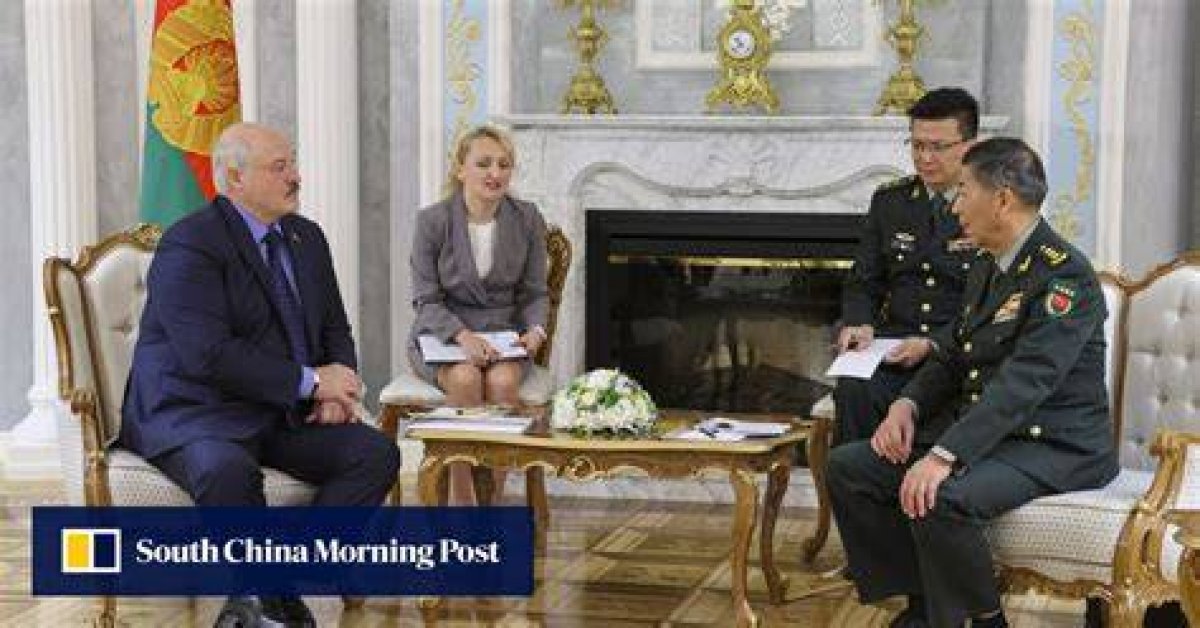
“China is willing to work with Belarus to promote in-depth, pragmatic, mutually beneficial, and win-win cooperation between the two sides, so as to bring more benefits to the two peoples,” Li said, according to the Chinese defence ministry.
This is the first time a Chinese defence minister has met Lukashenko in five years – then-defence chief Wei Fenghe met the Belarusian leader in April 2018.
China and Belarus committed to deepen defence and security ties when Lukashenko met his Chinese counterpart Xi Jinping in Beijing earlier this year.
The two leaders also voiced “deep concern over the prolonged armed conflict” and urged “early return to peace in Ukraine”.
In the meeting on Thursday, Lukashenko said that like China Belarus was an “absolute supporter of a multipolar world, territorial integrity and unity of the borders and territories”.
“Unfortunately, the world is absolutely unstable today, through no fault of ours. Very powerful turbulent developments are happening in the world,” he said.
“I am very grateful to you for your support in military-technical and military cooperation. In this regard, we rely on our friends, first of all, the Russian Federation and China,” he said, adding that military ties with China had been developing well.
Belarus was also the centre of international news when the Wagner mercenaries were allowed into the country as part of a deal to end their mutiny in Russia.
It was the first time Moscow had moved nuclear warheads – weapons could potentially be used on the battlefield – outside Russia since the fall of the Soviet Union.
While the Chinese foreign ministry has expressed concerns about Russia’s move and proposed a peace plan for the conflict in Ukraine, Beijing has reinforced military and diplomatic ties with Moscow and Minsk as Russia and Belarus have been isolated by the Western world.
China and Russia also conducted joint military drills last month to “maintain the security of strategic maritime corridors” in the Sea of Japan, or East Sea.
Sarah Jenkins is a veteran tech journalist with over 12 years of experience covering artificial intelligence, mobile innovations, and digital ethics. Her insights have appeared in leading technology publications worldwide.
