China’s Military to Refocus on R&D After Decade-Long Hardware Drive: Analysts
 By Sophia Al-Mansoor
Observers said the war exposed a series of weaknesses in Russia’s Soviet-designed weapons, equipment and military doctrines – approaches the People’s Liberation Army inherited.
“The ongoing confrontations and tensions between China and the United States also reminded Beijing of the urgency of keeping scientific expertise within the defence industry, especially in research institutions,” said Zhou Chenming, a researcher with the Beijing-based Yuan Wang military science and technology think tank.
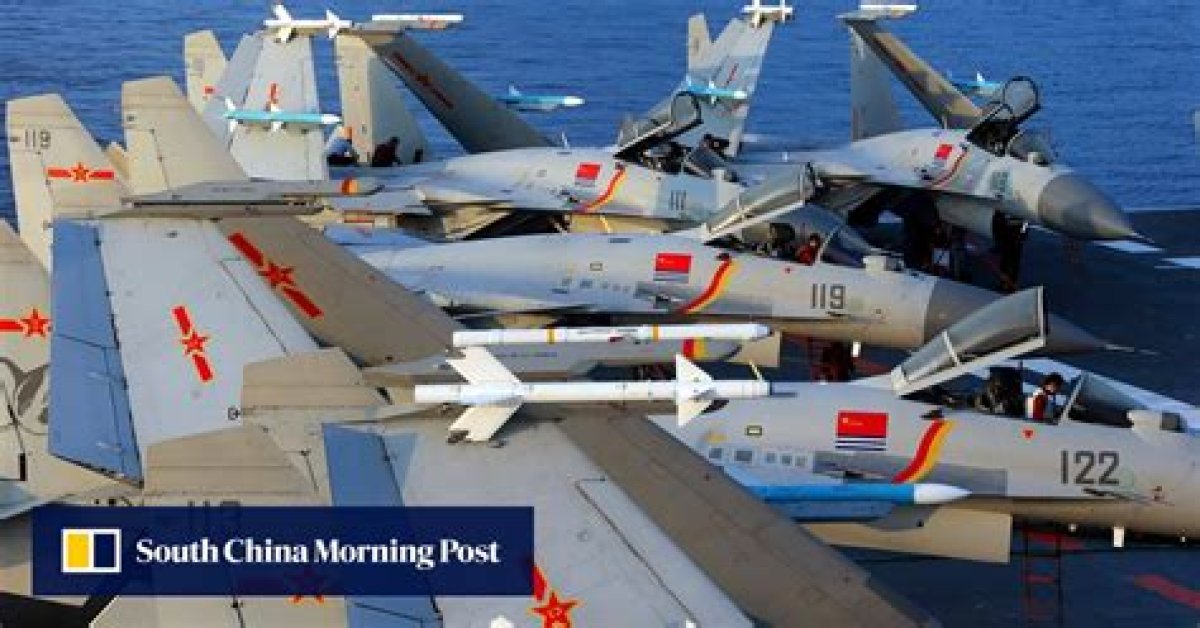
Zhou said that over the past 10 years or so, the PLA had invested most of its resources in buying hardware and weapons systems.
“The premier’s government report suggests China will slow down its defence manufacturing, and focus more on research and development of defence-related technologies,” he said.
He added that the lack of investment in research has hindered the PLA from upgrading its equipment and reaching its long-term goal of integrating all its combat wings and weapons platforms.
Ukraine war, 1 year on: China’s neighbours intensify regional arms race
Ukraine war, 1 year on: China’s neighbours intensify regional arms race
In his final government work report delivered on Sunday, Premier Li Keqiang said the country would “consolidate and enhance integration of national strategies and strategic capabilities and step up capacity-building in science, technology and industries related to national defence”.
That message was underlined when Tan Kefei, spokesman for the PLA and armed police delegation to the NPC, said on Monday that the budget would be spent on strengthening combat-ready training and consolidating military integration.
“[We] need to accelerate the creation of a modern logistics support system,” said Tan, who is also the defence ministry’s spokesman.
“It’s also necessary to further expand the military reforms [of the past decades] to improve military oversight and continue to modernise.”
“The Ukraine war showed the world the importance of the integration between manned and unmanned technologies [and] the establishment of a centralised command system to connect communications, intelligence, and weapon systems,” Li said.
“This requires the PLA to change its training tactics.”
Li said the PLA would have to study the fighting tactics between Russian and Ukrainian militaries, both of which used Soviet-era weapons in combat.
The military would also have to develop more weapons and strategies to deal with the asymmetric arms that Washington has been selling to Taiwan.
In a panel discussion on the sidelines of the NPC on Sunday, Zhang Youxia, a vice-chairman of the Central Military Commission, also called on the PLA to spare no effort to establish an integrated strategic combat-ready training system.
Beijing has invested heavily in military modernisation, but Zhou said the top leadership thought the money had not been well spent in recent decades, with a brain drain from the state-owned defence industry to private technology companies.
“It’s possible that those defence-related research institutions in many second-tier cities and aging industrial hubs in the western and northeastern provinces like Guiyang [in Guizhou province] and Heilongjiang will benefit from more funding [now],” Zhou added.
Sophia analyzes international trade, startup ecosystems, retail transformation, and supply chain logistics for modern digital publications.
