Clean Beauty Pioneer: Why Emma Watson and Anne Hathaway Are Fans of Brand That ‘Understands the Bs’
 By Elena Rostova
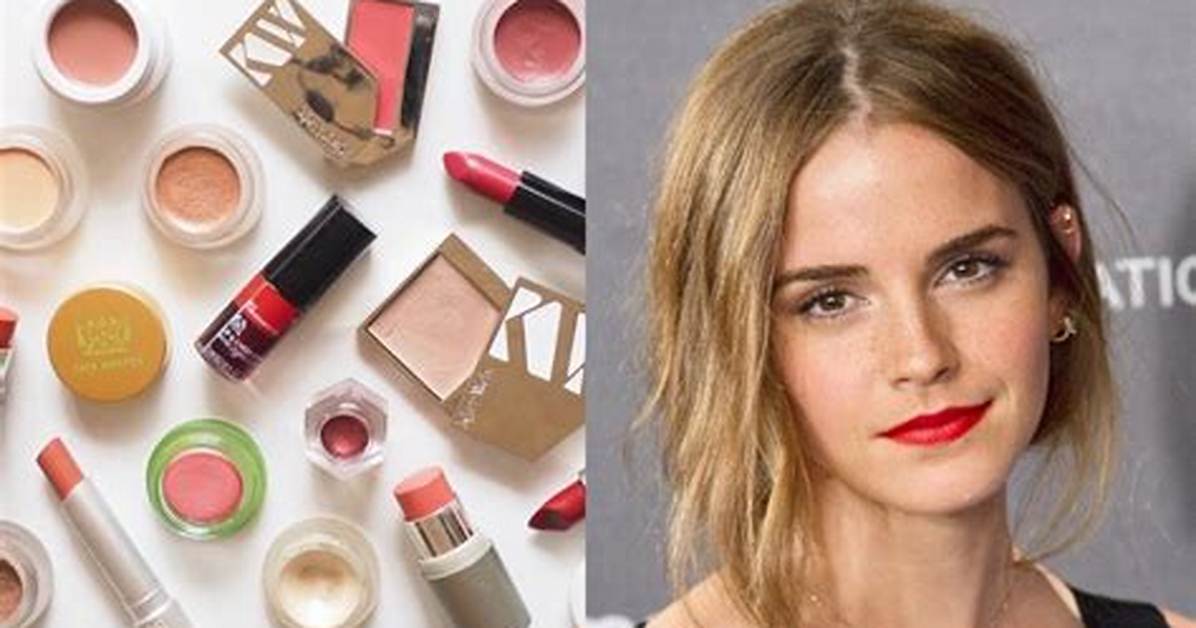
Her line has a cult following with women and celebrities, including Emma Watson and Anne Hathaway, and is available at high-end departments stores and boutiques such as Neiman Marcus in the United States, Le Bon Marché in Paris, and Space NK in London. This year she set her sights on Asia and launched in Hong Kong exclusively at Joyce Beauty. Southeast Asia is set to follow through a partnership with Sephora.
But more than that, she is educating customers and promoting non-toxic skincare as the norm.
“Everyone thinks ‘clean’ beauty is temporary but it’s a concept that needs to be baseline. I am very proud because not many other industries have reacted as fast as we have to change ingredients and clean up our act,” she says.
“Of course, not everyone has been able to fulfil their promise to use everything from nature or remove every single controversial chemical, but we are on our way.”
Harper’s journey into non-toxic beauty began when her stepfather was diagnosed with cancer. After accompanying him to various doctors, she become aware of the hazardous chemicals that were present not only in our food chain but also in the products we used every day, from cleaning supplies to grooming items. Finding alternatives were easy – until it came to skincare.
“There was nothing! Supermarkets carried low-quality products with single active formulas, while department stores would show me fancy products with natural ingredients like rose, mushrooms and algae,” says Harper, who at the time was an industrial engineer.
“Then I would read the ingredients on the box and realise that they were packed with industrial chemicals that belonged in cars and machines, like antifreeze derivatives.”
“I wanted to create a top-of-the-line, world-class skincare range featuring hardworking formulas and cutting-edge technology using real, active ingredients. I wanted our products to be the real deal – completely transparent, non-artificial but something that also fulfils all the fantasies a woman desires. The product should make our lives better.”
Five years later, Harper created her first product (it would later be named the Resurfacing Mask and is still one of the company’s bestsellers).
Rather than outsource production, she decided to base her operations at her family home in the US state of Vermont, to produce the product on site and control the supply chain (it also has a small farm where she cultivates some of the ingredients for her line).
Everything is free of GMOs, toxins, fillers and synthetic chemicals, artificial colours and fragrances – and Ecocert-certified to attest to its high quality.
Today her offerings are extensive and include basics such as cleansers, masks and serums, and skincare treatments such as the Supernatural range, which is known for its high-performance products, including the must-have Elixir Vitae, an anti-wrinkle solution.
“I’m super excited about neuro transmitter peptides, which is a new family of raw materials that give you the same results as Botox. Rather than paralysing the muscle they disconnect the nerve-to-muscle connection, so the wrinkle relaxes. You see results in just hours,” says Harper.
Her line continues to enjoy success, but the market is becoming increasingly crowded as more companies jump on the “natural beauty” bandwagon. While more choice is great for the customer, it has resulted in confusion about a variety of topics such as the importance of organic ingredients and how to define a “natural” product.
“People keep asking me about the difference between organic and non-organic ingredients. Take jojoba oil. Whether it’s organic or non-organic the quality and benefit to the skin will be identical,” she says.
Organic skincare label uses Mongolia’s natural bounty
Organic skincare label uses Mongolia’s natural bounty
“Choosing organic is more a question of whether you want to put something on your skin that is grown with synthetic ingredients or chemicals. It’s a question of farming method. In general, the more organic the better, not just for you but the planet.
“But sometimes there’s a raw material that’s amazing, but the grower can’t certify it as organic as its already too expensive or grown in a specific way, but I will buy it anyway as it’s fantastic and effective.
“You really need to understand what clean beauty means to you. Everyone’s parameters are different. Finding products that work for you is a journey, one product won’t work for everyone. It’s a matter of understanding what ‘BS’ is – which to me stands for bad science.”
Such issues haven’t stopped Harper focusing on the future. She is working on a sensitive-skin range and sunscreen, while continuing to dabble in men’s skincare. She is also investigating new markets like China, although that may be a challenge due to its policy of testing all cosmetic and beauty products on animals.
Her biggest ambition, however, is to change the industry for the better.
“I want to get more and more innovative, so companies pour more dollars into research and development, creating technologies that are sustainable too. With our work we are contributing less to the chemical industry. And by more people believing in what we do, we will trigger a bigger change so everyone wants to and has to work this way,” she says.
This article appeared in the South China Morning Post print edition as: Clean and green skincare that pays more than mere lip service
Elena Rostova holds a Master's degree in Public Health Journalism. She covers groundbreaking medical research, holistic wellness trends, mental health awareness, and nutritional science.
